Unlocking Dynamic Performance: Our Thermally Actuated Combustion Chamber Insert
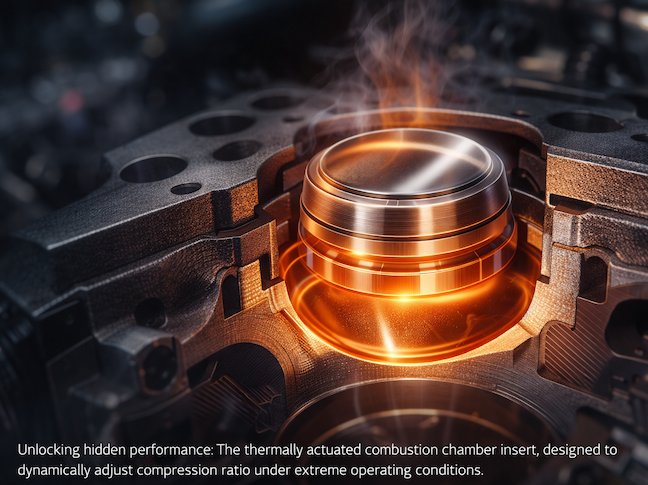
At the pinnacle of motorsport engineering, every fraction of a percent in efficiency and power can redefine a season. Our team has been relentlessly exploring innovative avenues to enhance internal combustion engine (ICE) performance, and we're thrilled to share insights into one of our most ingenious developments: a precision-engineered, thermally actuated combustion chamber insert. This component dynamically adjusts the effective compression ratio of our power unit, unlocking significant performance gains when it matters most.
The Challenge: Static Rules, Dynamic Performance Needs
Formula 1 regulations are, by nature, prescriptive. One such rule, Article C5.4.3 of the FIA Technical Regulations, stipulates that the geometric compression ratio (CR) of an ICE must not exceed 16.0:1 when measured at ambient temperature [Article C5.4.3]. This presents a fundamental challenge: how do we extract more performance from the engine when the CR—a critical factor in thermal efficiency—appears to be capped? Our engineers saw not a limitation, but an opportunity within the wording.
We recognized that while the static measurement at ambient temperature fixes one aspect, it doesn't dictate the CR during dynamic, high-load operation. Combustion chambers experience extreme temperatures—peaking well over 900°C—which create a significant thermal gradient across engine components. This thermal energy, usually a challenge to manage, became the key to our innovation.
Our Solution: Harnessing Thermal Expansion for Dynamic Compression
Our thermally actuated combustion chamber insert is designed to subtly yet effectively alter the combustion chamber volume when the engine is at full operating temperature. At ambient temperature, the insert ensures our engine rigorously complies with the 16.0:1 geometric compression ratio limit [Article C5.4.3]. However, as the engine heats up and the insert reaches its operational temperature, it undergoes controlled thermal expansion.
This expansion is meticulously calculated and directed into the clearance volume of the combustion chamber. By effectively reducing this volume, the insert increases the compression ratio at the point of combustion. We've targeted an effective operational compression ratio between 16.5:1 and 17.2:1 at peak temperatures, significantly boosting thermal efficiency and peak power output precisely when the car demands it the most.
To achieve this, we've carefully selected a high-creep-strength iron-based alloy. Article C15.8.2.a of the FIA Technical Regulations allows for cylinder head and inserts to be manufactured from aluminum or iron-based alloys [Article C15.8.2.a], giving us the material latitude needed. The material's high thermal expansion coefficient—targeted between 2.2e-05 and 2.5e-05 1/°C—is crucial for generating the desired volume reduction.
Engineering for Reliability and Compliance
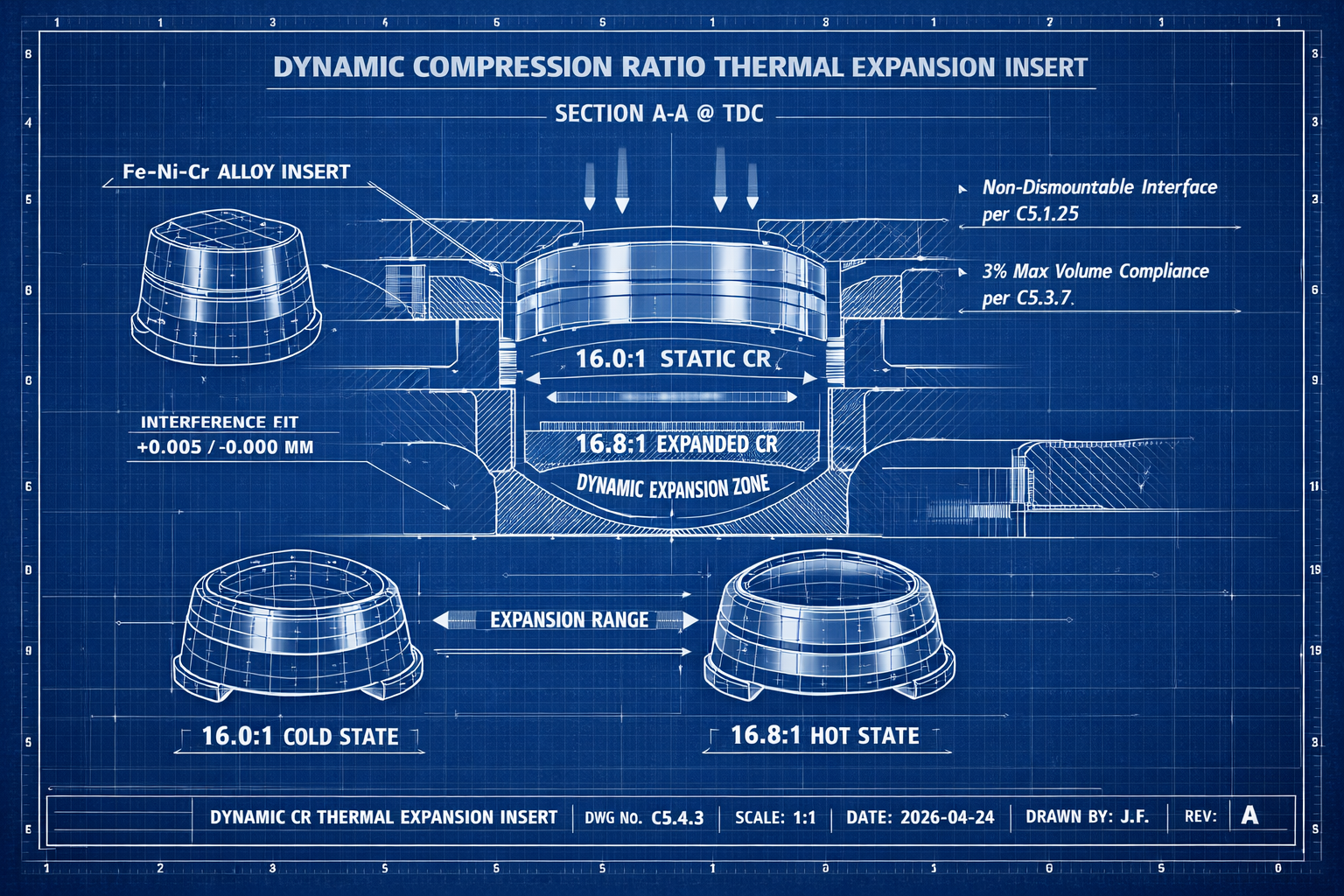
Designing such a component demands extreme precision and an acute understanding of both thermodynamics and regulatory nuances. The insert is a non-dismountable part that locally supports the cylinder head, as required by Article C5.1.25 [Article C5.1.25]. We achieve this non-dismountable status through an interference fit installation, followed by cryogenic stabilization, ensuring it becomes an integral part of the cylinder head structure.
Manufacturing integrity is paramount. Precision CNC machining ensures the expansion face maintains a tolerance of ±0.005mm at 20°C. This meticulous approach is critical to managing potential failure modes. For instance, we must prevent "piston clash"—where excessive expansion could lead to mechanical interference with the piston crown. Our design incorporates a mandatory 0.5mm safety clearance at maximum theoretical expansion, providing a robust safeguard.
Another critical consideration is compliance with Article C16.1.5, which states that surface coatings must not "energize the combustion" [Article C16.1.5]. Our team has carefully selected coatings that fulfill protective functions without influencing the combustion process in a prohibitive way. Furthermore, the total volume of head inserts, including valve seats and guides, must not exceed 3% of the total cylinder head volume, a constraint we strictly adhere to as per Article C5.3.7 [Article C5.3.7].
The Impact on Performance
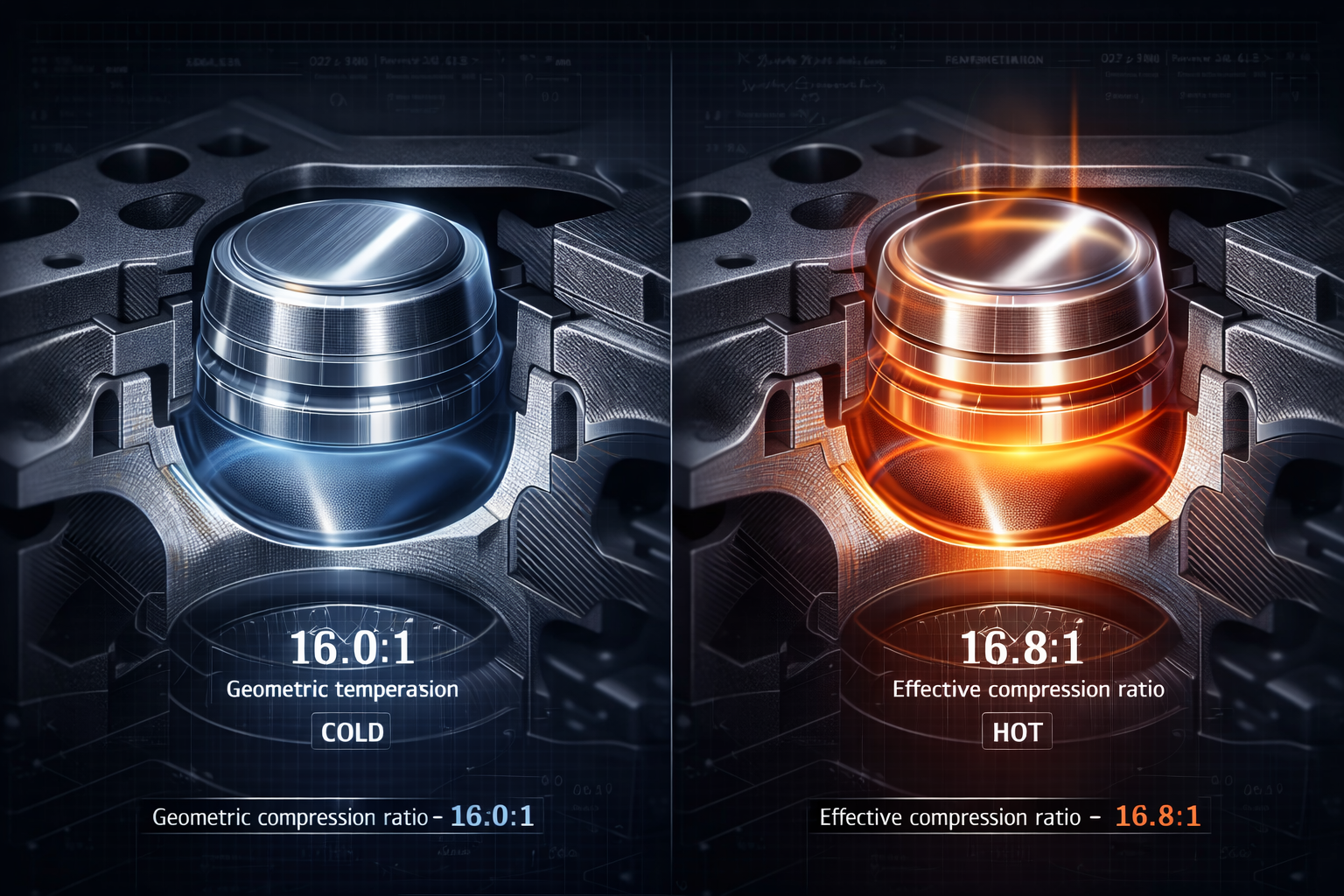
The ability to dynamically adjust the compression ratio means we can optimize our engine's performance across a broader range of operating conditions. During qualifying laps and critical race overtakes, when engine temperatures are highest, the increased effective compression ratio translates directly into more power and better fuel efficiency. This innovative application of fundamental thermodynamic principles allows our power unit to operate at its peak potential, pushing the boundaries of what's possible within the regulatory framework.
This thermally actuated combustion chamber insert is a testament to our team's commitment to ingenious engineering and our deep understanding of the FIA regulations. We're proud of the precision, material science, and thermodynamic expertise that has gone into developing this component, providing a tangible edge in the relentless pursuit of performance.
See also 2026 F1 Power Unit: Pushing the Compression Ratio Limit.