Steel Alloy Cylinder Head
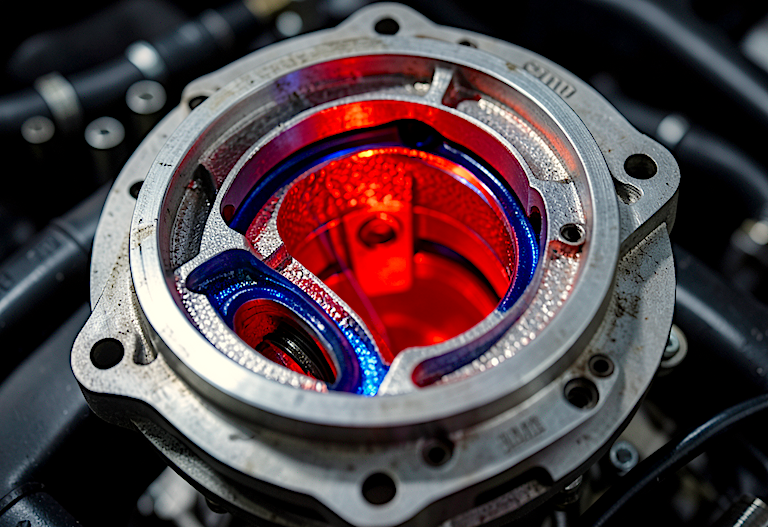
The 2026 Formula 1 technical regulations have ushered in a fundamental shift in power unit architecture, notably advancing combustion chamber design to operate under unprecedented pressure and temperature conditions. A key milestone embraced by our engineering team is the transition from traditional aluminum alloy cylinder heads to robust steel alloy constructions—a concept recently highlighted as a potential 'revolutionary' advantage for the 2026 Ferrari engine project. This material innovation is motivated by the need to withstand significantly increased combustion pressures while managing the thermal loads within tighter packaging and weight constraints. Steel alloys, such as Maraging Steel 300 and selected Chromium-Molybdenum (Cr-Mo) alloys, present superior mechanical strength and thermal resistance compared to conventional aluminum, enabling a more aggressive engine tuning strategy and improved power density. This material development aligns with the strategic goals set by the 2026 PU regulations, providing a structural base for enhanced combustion efficiency and durability within the Formula 1 power unit framework.
Material Selection and Regulatory Compliance
Choosing the right steel alloy for the cylinder head was constrained by stringent FIA material eligibility rules (Article C15.1.8). Our team shortlisted high-strength, non-exclusive materials such as Maraging Steel 300 and certain Cr-Mo alloy variants, ensuring global commercial availability under normal terms. This selection process is critical because the FIA mandates that materials must be accessible to all competitors and not monopolized by a single supplier. Additionally, design constraints imposed by the regulations require careful control of combustion chamber insert volumes per Article C5.1.7: valve seats and guides inserts can occupy no more than 3% of the cylinder head volume, with other approved inserts limited to an additional 1%. The geometric configuration of dismountable components integrated into the head, including spark plug and fuel injector mountings, must adhere to dimensional limits set out in Article C5.1.9, specifically maintaining mounting bore diameters within a strict 15 mm coaxial cylinder [Article C15.1.8][Article C5.1.7][Article C5.1.9].
Design Innovations and Thermal Management Strategies
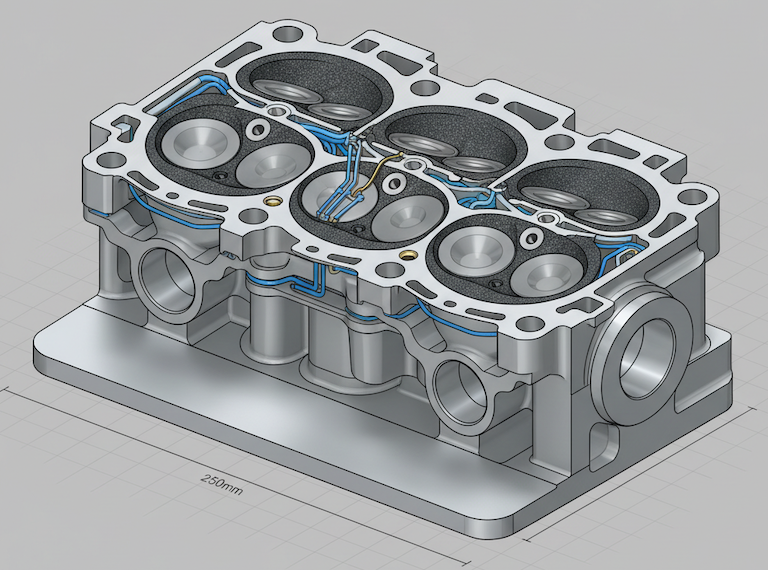
The superior tensile strength and improved thermal endurance of steel alloys facilitated several innovative design decisions. Our engineers targeted peak cylinder pressures up to 19,000 bar, a dramatic rise compared with aluminum counterparts, taking advantage of steel's enhanced fatigue resistance and higher yield strength. This permitted refinement of combustion chamber geometry and valve seat configurations, carefully balanced with the maximum allowable insert volume fraction. To manage the elevated temperatures, we incorporated advanced zirconia-based ceramic thermal barrier coatings on the combustion chamber surfaces, significantly reducing heat rejection to the cooling system and preserving combustion efficiency. Coupled with redesigned coolant passages optimized for steel’s thermal conductivity profile, the thermal management system ensures local hotspots are mitigated and component lifespan is maximized. The robust nature of the steel also allowed mass optimization — primarily through reducing cooling passage bulk and redistributing the weight savings elsewhere in the power unit architecture within the 2026 regulatory mass allowance [Article C1.2.3][Article C5.1.7].
Manufacturing Techniques and Quality Assurance
Manufacturing the steel alloy cylinder head necessitated advances in machining and inspection technologies. Unlike aluminum, steel is harder and demands multi-axis CNC machining centers with cutting tools optimized for the steel grade, ensuring intricate geometries and tight tolerances are met without inducing residual stresses or microcracking. Surface finish on all sealing faces, notably the head gasket surface and port openings, was controlled to sub-Ra 1.6 μm, critical for reliable sealing under extreme pressure. Our validation process incorporated rigorous Non-Destructive Testing (NDT) protocols including ultrasonic testing and dye penetrant inspection to detect any subsurface or surface flaws post-machining. Final dimensional inspection employed coordinate measuring machines (CMM) integrated with laser scanning, guaranteeing adherence to CAD model specifications and allowing precise verification of mounting bore diameters and insert clearances [Article C15.1.8].
Failure Modes and Mitigation Strategies
Operating under unprecedented combustion pressures and thermal gradients introduced new potential failure modes. Primary challenges include overheating due to the lower thermal conductivity of steel compared to aluminum, which could induce localized fatigue or gasket degradation. To mitigate this, extensive computational fluid dynamics (CFD) analyses were undertaken to optimize coolant flow and thermal barrier coating placement, validated by on-track temperature monitoring. Material fatigue under cyclical high pressure was addressed through comprehensive finite element analysis (FEA), identifying stress concentration zones and reinforcing geometry as necessary. Gasket and seal material selection was critical, with our team qualifying specialized high-pressure compounds compatible with steel surfaces to prevent leakage at mounting interfaces. Lastly, precise machining and assembly control minimized risks of component interference and ensured dimensional clearances, abating premature wear or seal failures during service [Article C5.13.8][Article C1.2.3].
Interface Management and Assembly Considerations
The cylinder head's interfaces with the engine block, intake and exhaust ports, coolant and oil galleries, as well as the dismountable mounts for fuel injectors and spark plugs, demanded particular attention. Maintaining flatness and structural integrity on the engine block interface was essential to ensure effective sealing against combustion chamber pressure and fluid leaks. Sealing at the intake and exhaust ports while complying with the intake valve diameter limitations specified in Article C5.4.13 required accurate port geometry control. Coolant and oil galleries were designed for maximum reliability, requiring robust sealing solutions that withstand thermal expansion differences between steel and adjoining components. Precision mounting for injectors and spark plugs was verified via CMM to meet dimensional and coaxial requirements, supporting reliable operation within the combustion environment [Article C5.4.13][Article C5.1.9].
Performance Implications and Future Development Pathways
The transition to a steel alloy cylinder head design unlocked new performance frontiers for the 2026 Power Units. Enhanced mechanical strength allowed safe operation at substantially higher combustion pressures and temperatures, directly translating into improved thermal efficiency and power output capabilities, with a flywheel horsepower target increased toward 45 hp for this component alone. The weight redistribution enabled by the steel head facilitated further optimization of power unit mass balance and ancillary component performance. Beyond immediate gains, this design sets a platform for continued evolution through material science advancements and regulatory adaptation, potentially incorporating novel steel alloys or composite coatings to push combustion performance and reliability even further in forthcoming seasons [Article C1.2.3].
References
 Oliver Harden
 Alexandre Filluzeau
- Article C1.2.3: FIA 2026 Technical Regulations - Article C1.2.3
- Article C15.1.8: FIA 2026 Technical Regulations - Article C15.1.8
- Article C5.1.7: FIA 2026 Technical Regulations - Article C5.1.7
- Article C5.1.9: FIA 2026 Technical Regulations - Article C5.1.9
- Article C5.13.8: FIA 2026 Technical Regulations - Article C5.13.8
- Article C5.4.13: FIA 2026 Technical Regulations - Article C5.4.13