Kinematic and Aerodynamic Synergy: The Sixth Member’s Role in Dynamic Rear Flow Management
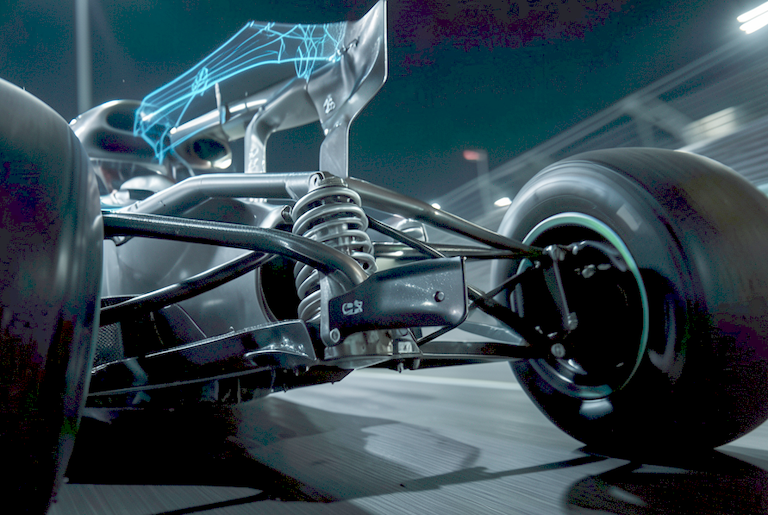
Introduction: Engineering the Sixth Member for Rear Downforce and Flow Conditioning
In the quest for enhanced rear downforce and more efficient rear wing performance, the area around the rear suspension has long presented a complex aerodynamic challenge. Numerous turbulent structures and wake interactions combine to reduce the effective airflow quality reaching the beam wing and rear wing elements. Recognizing this, the FIA regulations offer an aerodynamic exemption for a single rear suspension member, commonly called the “sixth member” under Article C10.3.6.d [1]. This regulatory allowance permits one of the six rear suspension members per wheel to deviate from the otherwise strict constant cross-sectional and incidence constraints, opening the door to innovative aerodynamic integration.
Our engineering effort focused on applying this exemption to develop two interrelated components: a kinematically controlled actuator and a modal downwash generator. These elements function in concert to passively control the aerodynamic incidence and flow conditioning of the sixth member fairing, dynamically adapting to suspension travel without active actuation. This article details their design, regulatory integration, and the synergy between mechanical kinematics and aerodynamic tuning.
The Kinematic Plunge-Link Actuator: Enabling Controlled Morphing of the Sixth Member
The Kinematic Plunge-Link Actuator is a high-precision linkage system engineered to convert vertical suspension displacement into adaptive aerodynamic surface morphing, all while fully complying with the FIA technical regulations governing movable aerodynamic devices [2]. It mechanically connects the rear suspension upright to the Rear Impact Structure (RIS) through a custom cam-slot geometry integrated into the RIS mounting flange.
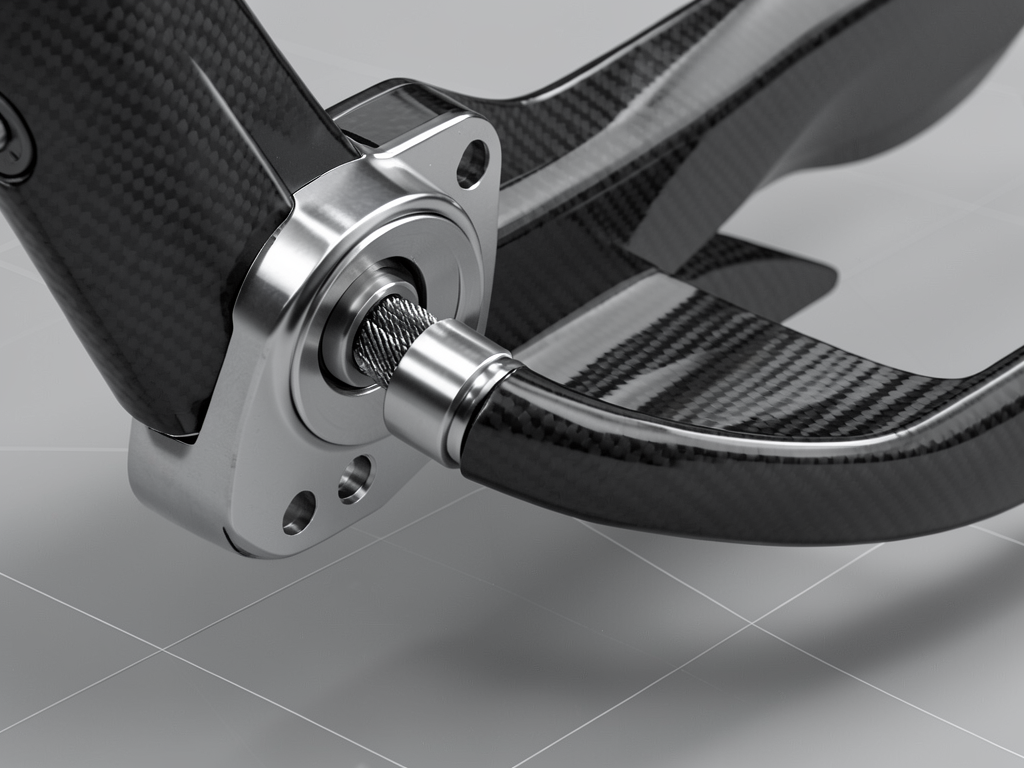
At the heart of the design is a cam-slot track precision-machined from aerospace-grade Ti-6Al-4V titanium alloy using five-axis CNC processes to achieve a surface finish better than Ra 0.4 microns. This cam-slot controls a roller follower bearing mounted to the sixth member’s titanium structural core, enabling a non-linear rotation of the aerodynamic fairing as the suspension compresses or rebounds across an 80 mm vertical travel range.
A key innovation is the modal trigger point set roughly at 55 mm of suspension compression. Up to this point, incidence changes remain minimal, preserving low drag during high-speed straights and DRS zones. Beyond this, the cam geometry facilitates a rapid 8–12° increase in incidence angle, boosting downwash directed toward the rear floor and low beam wing during aggressive cornering or heavy braking states. This passive morphing effect acts as a modal shift in aero behavior without requiring active control systems, conforming precisely to Article C10.3.1’s mandate that aerodynamic states be uniquely defined by suspension displacement with no independent degrees of freedom.
Engineering constraints included limiting hysteresis to under 0.05° deviation between compression and rebound at fixed heights, as well as ensuring zero degrees of freedom between the aerodynamic fairing and the internal structural core, aligning with Article C3.17.2.b. Carrying a maximum assembly weight of 1.4 kg per side demanded lightweight materials and careful load path optimization. Integration with the RIS required the cam track flange to avoid compromising carbon fiber layup continuity and maintain crashworthiness per Article C13.7.3. Mechanical reliability was safeguarded against cam-follower seizing through diamond-like carbon coatings on roller bearings.
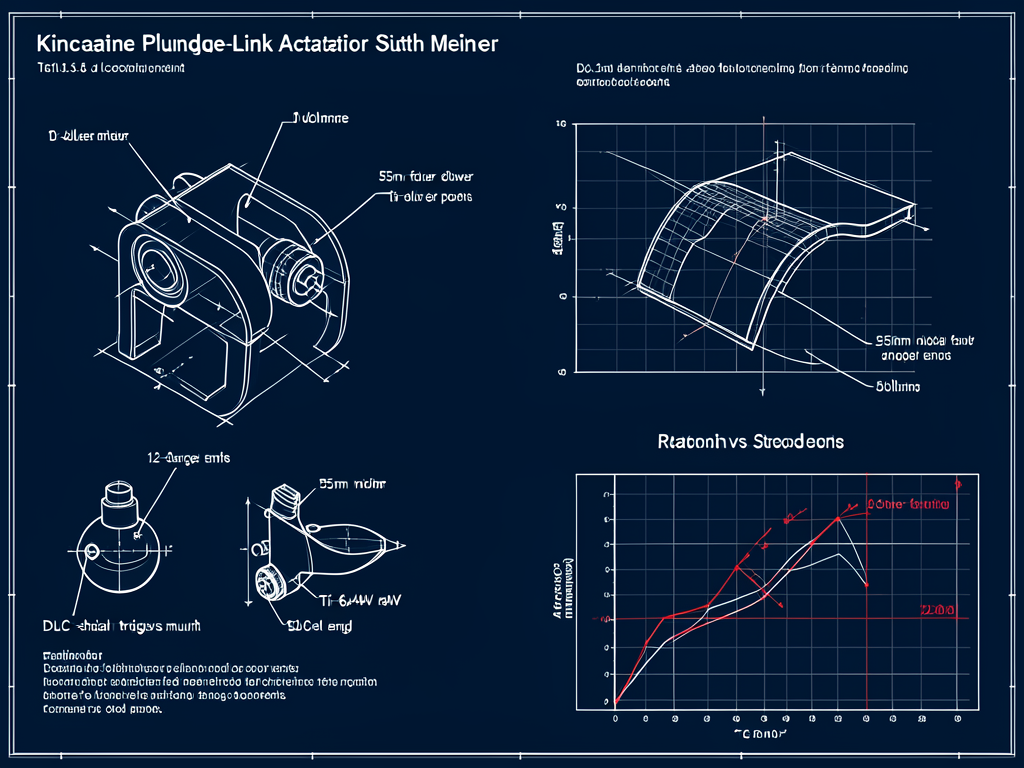
Rigorous testing on suspension rigs and laser measurement verification ensured the actuator's unique mapping from vertical position to incidence angle was consistent and repeatable across operational loads. This bespoke plunge-link actuator allowed us to realize sophisticated dynamic aero tuning purely through mechanical kinematics while maintaining legal compliance across all FIA technical mandates.
Modal Downwash Generator Sixth Member: Aerodynamic Innovation in Suspension Design
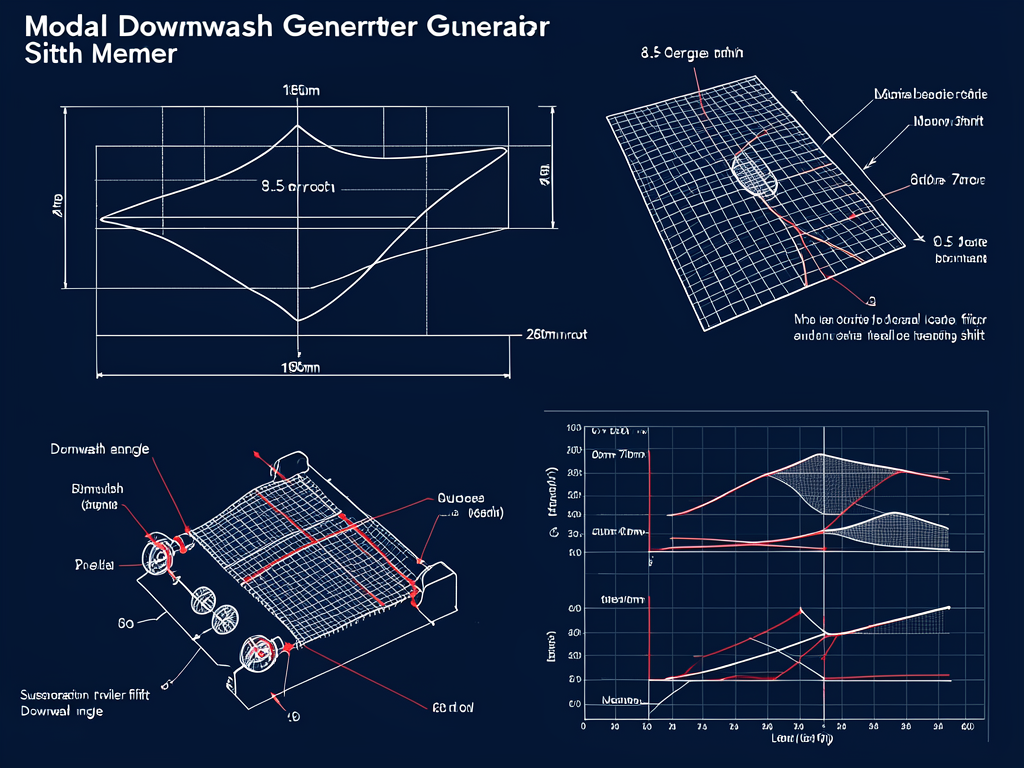
Complementing the kinematic actuator, the Modal Downwash Generator (MDG) represents an aerodynamic-first approach to the sixth suspension member's design [3]. Exploiting the unique exemption granted under Article C10.3.6.d, the MDG integrates a cambered, non-constant chord wing profile optimized to condition airflow dynamically across suspension travel.
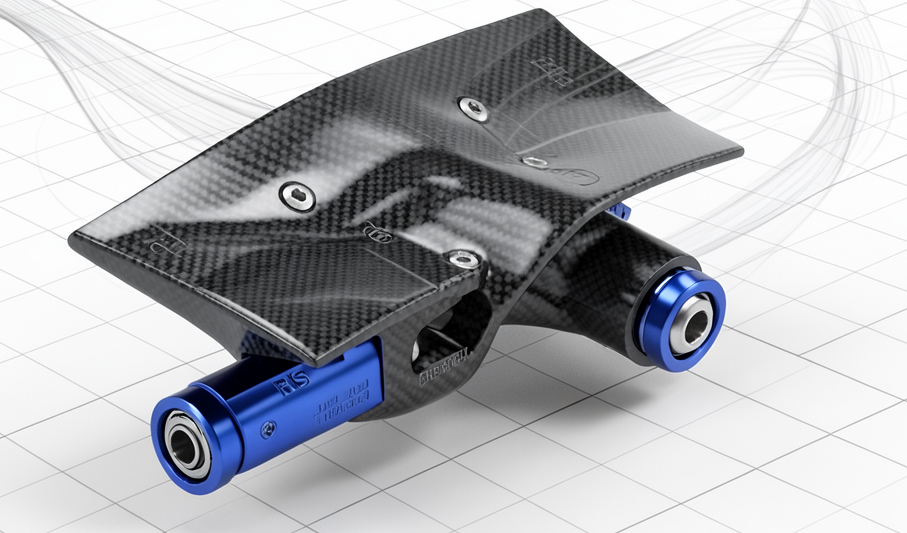
Unlike conventional members limited to constant cross-section and incidence, the MDG’s aerodynamic shape is designed for dual-modal flow behavior. It remains at near-neutral, low-drag incidence during static and low-load conditions, minimizing aerodynamic penalty on straights. As vertical travel reaches the modal compression band between 50 mm and 70 mm, the passive multi-link kinematic linkage shifts the MDG's incidence by approximately 8.5°, snapping it into a configuration that promotes intense downwash toward the rear beam wing and floor, thus enhancing flow attachment and extraction efficiency.
Manufactured from ultra-high-modulus carbon fiber (T1000 or equivalent) co-cured with an integrated structural core, the MDG maintains exceptional stiffness to preserve its complex aerodynamic profile under high dynamic loads. Structural stiffening via internal ribbing and adhesive bonding ensures no skin delamination occurs at speeds approaching 300 kph. The aerodynamic fairing and core function as a monocoque assembly with zero relative movement, satisfying the zero degrees of freedom condition required under Article C3.17.2.b.
The MDG's chord length varies from approximately 260 mm at the root to 185 mm at the tip, achieving an aspect ratio around 2.8:1 to ensure compliance with Article C3.17.3.d limitations. The incidence at legality setup is set near 5.5° nose down, within the ±10° regulatory window. Motion studies and 4-post rig validation confirmed the incidence versus travel curve is a unique mathematical function of vertical wheel displacement, thus meeting the non-actuated movable aero criteria under Article C10.3.1.
This innovation in suspension design demonstrates how structural and aerodynamic integration can be leveraged to provide dynamic flow management without breaching prohibitions on active aerodynamic elements.
Comparative and Integrated Analysis: Kinematics Meets Aero in Sixth Member Design
The Plunge-Link Actuator and Modal Downwash Generator are complementary solutions addressing the complex interplay of mechanical and aerodynamic demands in the rear suspension system. While the actuator focuses on precision-controlled morphing of the aerodynamic fairing incidence through a robust cam-driven linkage, the MDG adopts a passive multi-link mechanism to induce discrete, modal incidence shifts in the aerodynamic profile.
Both components rely on regulated kinematic mappings that maintain unique, suspension-position-dependent aero states, thereby rigorously adhering to movable aero regulations. The actuator’s cam-slot system is mechanically more complex, offering finely tunable variation in incidence angle. This fine control enhances aero responsiveness but entails tighter manufacturing tolerances, higher mechanical complexity, and greater attention to hysteresis minimization.
Conversely, the MDG's multi-link architecture privileges structural simplicity and aerodynamic purity, relying on a binary modal shift to achieve its flow-conditioning goals. This approach reduces potential failure modes such as cam wear or linkage binding, supporting regulatory reliability.
Integrating both systems demanded careful coordination of mounting interfaces, ensuring neither compromises the Rear Impact Structure's crash integrity, nor the aerodynamic fairing’s structural independence. Weight budgets, clearance envelopes around brake cooling ducts, and spatial constraints within the rear upright assembly further shaped design choices.
Their combined passive operation simplifies compliance with Article C10.2.2 restrictions against movable aero systems having active inputs. By using only kinematic inputs derived directly from vertical suspension travel and avoiding any electronic feedback, the system remains fully transparent to scrutineers and technically robust on track.
Conclusions: Implications of Sixth Member Innovations for 2026 and Beyond
Utilizing the sixth member exemption under FIA Article C10.3.6.d unlocks considerable aerodynamic potential in an area traditionally constrained by rigid suspension regulations. Our twin-solution approach—leveraging the Kinematic Plunge-Link Actuator’s passive morphing capability alongside the Modal Downwash Generator’s modal incidence shift—demonstrates how synergistic mechanical and aerodynamic design can dynamically tailor rear flow conditioning within a fully legal framework.
This passive morphing architecture marks an evolution beyond fixed-profile components, offering richer tuning possibilities and improved rear wing efficiency that responds organically to vehicle dynamics. The compliance with stringent hysteresis and structural integrity limits ensures reliability, simplifying integration into the broader chassis without complicating maintenance or inspection.
Looking forward, the principles validated here provide a platform for continuing innovation in suspension-integrated aero devices. Optimizing kinematic linkages for finer aerodynamic control, exploring novel composite manufacturing techniques, and advancing our understanding of flow interaction through the rear suspension zone will remain key developmental areas for our team.
The regulatory landscape's flexibility around the sixth member enables a subtle but important frontier in aero-performance gains for the 2026 season and beyond. Together, these innovations underscore the value of close collaboration between structural, aerodynamic, and regulatory engineering disciplines.
References
- [1]: FIA 2026 Technical Regulations - Article C10.3.6.d
- [2]: FIA 2026 Technical Regulations - Articles C10.2.6, C10.3.1, C3.17.2.b
- [3]: FIA 2026 Technical Regulations - Articles C10.3.2, C3.17.3.e, C3.17.3.d