The Aero-Acoustic Nose Sink: Engineering Boundary Layer Control via Vortex Shedding in the 2026 Nose Assembly
Introduction to Boundary Layer Management in F1 Nose Aerodynamics
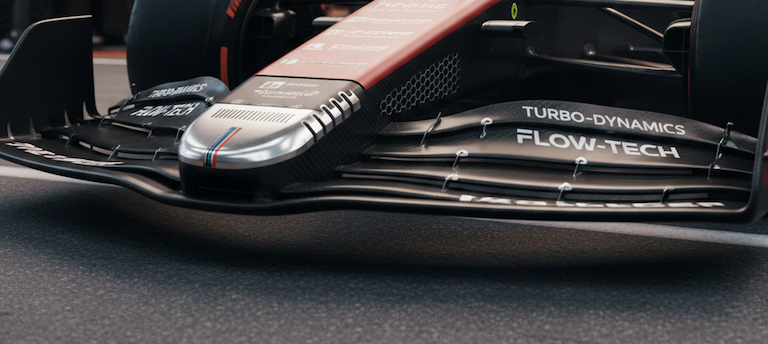
Our team approached the challenge of managing boundary layer buildup on the upper surfaces of the Formula 1 nose, particularly around the cockpit and halo region. Thickened boundary layers here increase aerodynamic drag and disturb cleaner airflow toward the rear of the car. To address this, we leveraged the allowance under Article C3.16.19 of the 2026 FIA Technical Regulations, which permits controlled boundary layer ingestion to improve downstream pressure recovery and wake behavior. This strategy targets the thickened, low-energy airflow that naturally forms over the long nose section, helping us maintain a higher energy flow over critical rear-facing surfaces without violating dimensional or structural limits.
Design and Functional Architecture of the Aero-Acoustic Nose Sink (AANS)
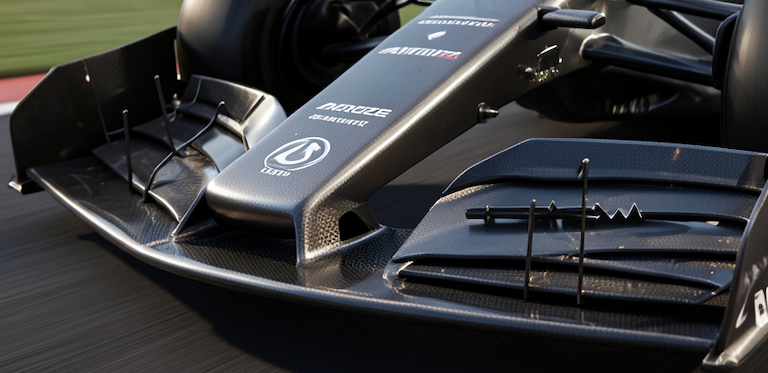
The Aero-Acoustic Nose Sink (AANS) replaces the standard upper nose vanity panel and structural cover with a highly integrated dual-function aerodynamic and structural component. Our design splits the part into two key zones: a vortex-shedding tripping edge situated at the junction of the Front Impact Structure (FIS), and a recessed collector duct that acts as a sink ingesting low-energy boundary layer air.
Structurally, the AANS forms a removable upper nose section, mounted to the survival cell with four M8 titanium fasteners designed to resist longitudinal loads of up to 50 kN as per Article C12.2.2.g.iv. This removable feature allows rapid aerodynamic tuning without chassis modifications. In keeping with FIA dimensional regulations, the total aperture width is strictly limited to 100 mm cumulative projection per C3.16.19 and C12.2.2.f.ii, ensuring a compliant and efficient airflow ingestion pathway.
Aerodynamic Principles and Boundary Layer Ingestion Mechanics
By ingesting the thickened boundary layer air through the recessed duct, the AANS reduces the effective displacement thickness of the wake that reaches the halo and driver’s helmet. This is critical because the boundary layer in this area typically features lower energy flow which can increase drag and disrupt rear aerodynamic devices.
The vortex trip at the FIS interface is designed as a serrated Gurney-style edge machined from 7075-T6 aluminum inserts integrated into the carbon fiber laminate. This tripping edge deliberately instigates vortex shedding, helping to energize the flow and prevent laminar separation bubbles that could cause stall conditions at the aperture entry.
The ingestion also improves overall wake management by smoothing pressure gradients and optimizing the rear cooling efflux generated by underbody and sidepod airflow channels. The collected air is rerouted internally within the survival cell volume, aligning with regulations, and contributes to improved aerodynamic efficiency and drag reduction across the car’s longitudinal axis.
Structural Engineering and Material Choices for the AANS
To meet the demanding load requirements of Article C12.2.2.g.iv, the AANS features an internal 'I-beam' skeleton built from high-modulus carbon fiber reinforced polymer (CFRP) laminates, specifically using high-modulus T1100G prepreg material. This material was selected for its superior stiffness-to-weight properties, crucial for maintaining structural integrity without unnecessary mass penalty.
The vortex-shedding edges are constructed from machined 7075-T6 aluminum inserts bonded into the CFRP layup to achieve C0 geometrical continuity and withstand aerodynamic loads without deformation or damage. This hybrid approach optimizes both aerodynamic precision and mechanical strength. The fastening points, using M8 titanium bolts, are designed redundantly to exceed the required shear load margin, ensuring reliability under peak race condition stresses.
Regulatory Compliance and Aerodynamic Integration Challenges
We carefully designed the AANS to strictly comply with multiple key FIA constraints. These include: limiting the projected aperture area to a maximum of 10,000 mm² (100 mm x 100 mm) as per Article C3.16.19, maintaining surface normal angles within 25 degrees to the car’s X-plane per Article C12.2.2.g.iii, and ensuring that all air ingested is routed internally to the survival cell volume, satisfying C3.16.19.ii.
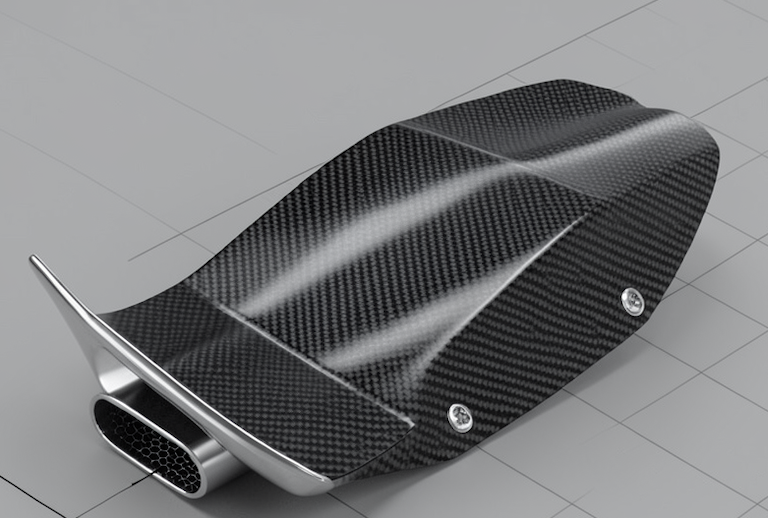
The fully sealed internal ducting was validated through rigorous smoke testing and pressure differential measurements, verifying no leakage outside the cockpit volume. Dimensional compliance was confirmed by detailed 3D scanning at 50 mm intervals along the car axis, and the surface finish was precisely controlled with Ra < 0.8 μm to minimize internal pressure losses.
The removable structural section concept enabled flexible aerodynamic refinement during race weekends without requiring new homologation, providing a valuable tool for adaptative setup optimization.
Failure Modes and Mitigation Strategies in High-Load Aerodynamic Components
Our risk assessment identified key failure modes including fastener shear from peak aerodynamic or inertial loads, foreign object debris (FOD) blockage of the intake aperture, and laminar separation bubbles at the aperture entry lip causing airflow stall.
To counter these, we incorporated redundant M8 titanium fasteners rated for 60 kNm shear loads, ensuring load sharing and structural reliability. An internal debris screen made from a 5 mm hexagonal mesh prevents FOD ingress without restricting airflow. Serrated Gurney-style trip strips on the inlet leading edge reliably maintain turbulent transition and prevent separation bubbles.
Practical Insights and Optimization Capabilities in Race Conditions
One of the standout features of the AANS is its removable structural section design, which our engineers use to rapidly test different vortex trip profiles during Friday practice sessions. By swapping or finely tuning these removable inserts, we can adapt the vortex shedding characteristics to specific track aerodynamic demands without touching the core chassis or front wing assembly.
This flexibility enables targeted reductions in drag or improvements in wake stability, balancing front-end downforce and rear cooling performance. It exemplifies how integrating aerodynamic and structural design can provide competitive advantages through adaptability and nuanced airflow management.
In summary, our Aero-Acoustic Nose Sink represents a sophisticated solution to the complex challenge of boundary layer control over the Formula 1 nose. By merging vortex shedding mechanics with structural innovation and rigorous FIA regulation compliance, the AANS enhances aerodynamic efficiency and race adaptability, helping optimize performance across diverse race conditions.